
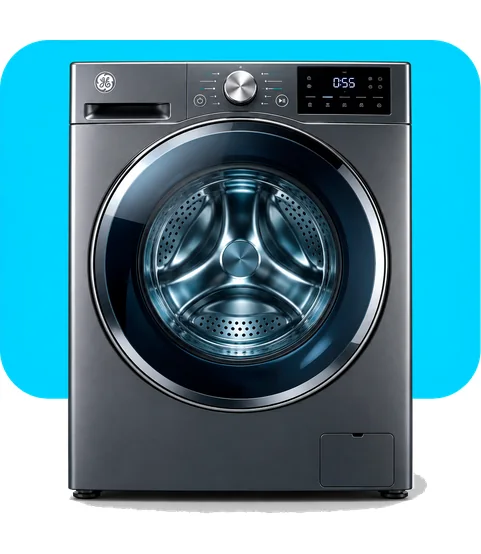
Drain Pump and Drainage Repairs
Water remaining in a GE washer calls for a review of drainage, installation, and the pump circuit. We identify the cause before recommending a replacement assembly.
Online booking opens in a new tab.

Easily book and customize your appointment details online.

Select the day and time for your service, even as early as same-day.

Your tech arrives on time bringing the tools, expertise and know-how for the job.

Need help with your General Electric washer? E-genius Appliance Repair diagnoses common problems such as not draining, not spinning, not filling, or leaking water in Charlotte, NC. Our technicians focus on the appliance fault, explain the recommended repair, and use repair procedures appropriate for the model.
Schedule online or call (980) 443-5851 to request General Electric washer repair.
We're only a few clicks or a phone call away.
No risk. No pressure.
Guaranteed parts and service.
Expert technicians.
Start with what happens during the GE wash cycle: no incoming water, slow draining, repeated balance attempts, or a control that will not respond. An UltraFresh feature issue is listed separately from symptoms that can occur on other washer designs.
These are possible service scenarios, not confirmed diagnoses or a ranking of defect frequency. Use only the checks permitted by your model's owner manual.
No response from the controls
Power is on, but the cycle will not begin
No water or very slow filling
Water stays in the tub
Spin fails or clothes remain wet
Movement or vibration during spin
Water appears around the washer
The door or lid remains locked
Possible causes or conditions: Supply, outlet, cord or control may be involved; verify installation and recorded code.
Applies to: All washer controlsNext step: Check household supply and documented restart procedure; recurring electrical faults need qualified service.
Possible causes or conditions: Loss of supply or display/control problem are possible; confirm whether any indicators work.
Applies to: Electronic display modelsNext step: Check household supply and documented restart procedure; recurring electrical faults need qualified service.
Possible causes or conditions: Distinguish supply interruption from a programmed pause; record when it stops.
Applies to: All washer controlsNext step: Check household supply and documented restart procedure; recurring electrical faults need qualified service.
Possible causes or conditions: Electrical fault or circuit problem needs qualified diagnosis; stop repeated resets.
Applies to: All washer controlsNext step: Stop using the washer and do not keep restarting it or resetting the breaker. Keep clear of wet electrical parts; arrange qualified appliance or electrical diagnosis. For active fire, smoke, or immediate danger, leave the area and call 911.
Possible causes or conditions: Check selected cycle, start procedure, control lock, delay start and closure status.
Applies to: All washer controlsNext step: Record the exact display and model; qualified service should test the affected circuit.
Possible causes or conditions: Control lock, button state or UI issue may be involved; do not assume main-board failure.
Applies to: Electronic controlsNext step: Record the exact display and model; qualified service should test the affected circuit.
Possible causes or conditions: Confirm lock mode and wet/dirty control surface before service diagnosis.
Applies to: Electronic controlsNext step: Record the exact display and model; qualified service should test the affected circuit.
Possible causes or conditions: Record the beep pattern and illuminated indicators; alerts can be status or faults.
Applies to: Audible-alert controlsNext step: Record the exact display and model; qualified service should test the affected circuit.
Possible causes or conditions: Stop use, isolate power when safely accessible and arrange qualified diagnosis.
Applies to: All washersNext step: Stop using the washer and do not keep restarting it or resetting the breaker. Keep clear of wet electrical parts; arrange qualified appliance or electrical diagnosis. For active fire, smoke, or immediate danger, leave the area and call 911.
Possible causes or conditions: Stop use and arrange qualified electrical / appliance service.
Applies to: All washersNext step: Stop using the washer and do not keep restarting it or resetting the breaker. Keep clear of wet electrical parts; arrange qualified appliance or electrical diagnosis. For active fire, smoke, or immediate danger, leave the area and call 911.
Possible causes or conditions: Faucet, supply hose, inlet screen, valve or sensing problem is possible.
Applies to: All washersNext step: Check open supply faucets and visible hose restrictions; persistent fault requires model-specific diagnosis.
Possible causes or conditions: Low supply pressure or restrictions may be involved; check visible hoses.
Applies to: All washersNext step: Check open supply faucets and visible hose restrictions; persistent fault requires model-specific diagnosis.
Possible causes or conditions: Check household hot supply and hose routing; internal heater is a separate feature.
Applies to: Separate hot/cold inlet modelsNext step: Check open supply faucets and visible hose restrictions; persistent fault requires model-specific diagnosis.
Possible causes or conditions: Check household cold supply, faucet and hose routing.
Applies to: Separate hot/cold inlet modelsNext step: Check open supply faucets and visible hose restrictions; persistent fault requires model-specific diagnosis.
Possible causes or conditions: Hose reversal, supply temperature and cycle design may affect results.
Applies to: Temperature-selection modelsNext step: Check open supply faucets and visible hose restrictions; persistent fault requires model-specific diagnosis.
Possible causes or conditions: Drain siphoning / installation and level sensing are possible; verify drain setup.
Applies to: All washersNext step: Compare the drain-hose installation with the model manual without changing internal parts. If siphoning or repeated filling continues, arrange diagnosis of the installation and level system.
Possible causes or conditions: Inlet or level control may be involved; close water supply and stop use.
Applies to: All washersNext step: Stop use and close the water supply; arrange service for internal leakage.
Possible causes or conditions: Low visible water may be normal; compare with actual fill faults and wash results.
Applies to: HE front-load models onlyNext step: Check the owner manual for this control; this message alone does not establish a failed part.
Possible causes or conditions: Low level can be normal; verify model behavior before a fill-fault diagnosis.
Applies to: Automatic-level HE top-load modelsNext step: Check the owner manual for this control; this message alone does not establish a failed part.
Possible causes or conditions: Drain restriction, pump, installation or foam are possibilities.
Applies to: All washersNext step: Check the visible drain hose and household drain; use only model-approved accessible filter instructions. Service if persistent.
Possible causes or conditions: Check visible drain restrictions and household drain; internal inspection needs model procedure.
Applies to: All washersNext step: Check the visible drain hose and household drain; use only model-approved accessible filter instructions. Service if persistent.
Possible causes or conditions: Check whether the cycle ended normally; distinguish sump residue from retained tub water.
Applies to: All washersNext step: Check the visible drain hose and household drain; use only model-approved accessible filter instructions. Service if persistent.
Possible causes or conditions: Flood protection, retained water or control issue may be involved; record codes.
Applies to: All washersNext step: Check the visible drain hose and household drain; use only model-approved accessible filter instructions. Service if persistent.
Possible causes or conditions: A hum alone cannot distinguish blockage from electrical or pump faults.
Applies to: All washersNext step: Check the visible drain hose and household drain; use only model-approved accessible filter instructions. Service if persistent.
Possible causes or conditions: Household drain capacity / restriction or installation may be involved.
Applies to: All washersNext step: Stop the cycle and prevent further water discharge if safe. Have the household drain and installation checked; a household plumbing blockage is not automatically a failed washer pump.
Possible causes or conditions: Drain, load distribution, spin selection, closure or drive may be involved.
Applies to: All washersNext step: Redistribute the load and check leveling; repeated failure with normal loads needs service.
Possible causes or conditions: Review spin setting, load balance and draining before assuming a drive failure.
Applies to: All washersNext step: Redistribute the load and check leveling; repeated failure with normal loads needs service.
Possible causes or conditions: Balance protection, closure, draining or drive issues are possible.
Applies to: All washersNext step: Redistribute the load and check leveling; repeated failure with normal loads needs service.
Possible causes or conditions: Selected speed, load balance, foam or drive may limit spin.
Applies to: Variable-spin modelsNext step: Redistribute the load and check leveling; repeated failure with normal loads needs service.
Possible causes or conditions: Check leveling, load distribution and installation before component diagnosis.
Applies to: All washersNext step: Redistribute the load and check leveling; repeated failure with normal loads needs service.
Possible causes or conditions: Floor support, feet, load and installation should be assessed.
Applies to: All washersNext step: Redistribute the load and check leveling; repeated failure with normal loads needs service.
Possible causes or conditions: Unbalanced load, installation or suspension problems are possible.
Applies to: All washersNext step: Redistribute the load and check leveling; repeated failure with normal loads needs service.
Possible causes or conditions: Foreign objects, pump or drive may be involved; record the cycle stage.
Applies to: All washersNext step: Stop the cycle; persistent drive faults require service and component testing.
Possible causes or conditions: Noise origin needs inspection; symptom does not prove belt or bearing failure.
Applies to: All washersNext step: Stop the cycle; persistent drive faults require service and component testing.
Possible causes or conditions: Check external contact and items in the load; internal noise needs inspection.
Applies to: All washersNext step: Stop the cycle; persistent drive faults require service and component testing.
Possible causes or conditions: Drive, closure or control may be involved; distinguish tumble from high-speed spin.
Applies to: Front-load models onlyNext step: Stop the cycle; persistent drive faults require service and component testing.
Possible causes or conditions: Transport restraints, leveling and floor support need verification.
Applies to: Front-load models onlyNext step: Redistribute the load and check leveling; repeated failure with normal loads needs service.
Possible causes or conditions: Drive, cycle stage, lid control or obstruction may be involved.
Applies to: Top-load agitator / impeller models onlyNext step: Stop the cycle; persistent drive faults require service and component testing.
Possible causes or conditions: Check cycle behavior and load; worn drive parts require inspection.
Applies to: Top-load agitator models onlyNext step: Stop the cycle; persistent drive faults require service and component testing.
Possible causes or conditions: Some relay / lock clicks are normal; correlate with failure to start or lock.
Applies to: Interlocked electronic modelsNext step: Remove trapped laundry and close normally; do not bypass or force the interlock.
Possible causes or conditions: Use the exact model button sequence; do not assume latch failure.
Applies to: Control-lock equipped modelsNext step: Check the owner manual for this control; this message alone does not establish a failed part.
Possible causes or conditions: Retained water, hot water, motion or lock fault may prevent release; never force open.
Applies to: Interlock-equipped modelsNext step: Do not force the lock or reach into a moving washer. Retained water, heat, or motion may delay release; follow only the model-approved procedure and request service if it remains locked.
Possible causes or conditions: Check closure and trapped clothing; switch / latch circuit requires testing.
Applies to: Interlock-equipped modelsNext step: Remove trapped laundry and close normally; do not bypass or force the interlock.
Possible causes or conditions: Check codes and water/motion state; never bypass lid protection.
Applies to: Lid-lock equipped top-load modelsNext step: Remove trapped laundry and close normally; do not bypass or force the interlock.
Possible causes or conditions: Inlet leakage or drain backflow may be involved; close water supply and arrange diagnosis.
Applies to: All washersNext step: Stop use and close the water supply; arrange service for internal leakage.
Possible causes or conditions: Supply, drain, tub, dispenser or internal connections are possible; locate source.
Applies to: All washersNext step: Stop use and close the water supply; arrange service for internal leakage.
Possible causes or conditions: Inspect visible supply / drain connections without opening the cabinet.
Applies to: All washersNext step: Stop use and close the water supply; arrange service for internal leakage.
Possible causes or conditions: Supply, inlet path or dispenser may be involved; note first wet location.
Applies to: All washersNext step: Stop use and close the water supply; arrange service for internal leakage.
Possible causes or conditions: Drain hose, household drain or pump path may be involved.
Applies to: All washersNext step: Stop use and close the water supply; arrange service for internal leakage.
Possible causes or conditions: Trapped fabric, residue, gasket damage or closure may be involved.
Applies to: Front-load models onlyNext step: Stop use and close the water supply; arrange service for internal leakage.
Possible causes or conditions: Obtain a panel photo and count flashes; patterns differ by model.
Applies to: LED control modelsNext step: Record the exact display and model; qualified service should test the affected circuit.
Possible causes or conditions: Load sensing, supply, closure or drive problems are possibilities; record elapsed time.
Applies to: Automatic load-sensing controlsNext step: Record the exact display and model; qualified service should test the affected circuit.
Possible causes or conditions: Record the cycle stage, water left inside and any display message.
Applies to: All washersNext step: Record the exact display and model; qualified service should test the affected circuit.
Possible causes or conditions: Load, selected options, cold supply, foam and balancing can extend time.
Applies to: All washersNext step: Record the exact display and model; qualified service should test the affected circuit.
Possible causes or conditions: Displayed time is an estimate; draining or balancing may delay completion.
Applies to: Electronic time display modelsNext step: Record the exact display and model; qualified service should test the affected circuit.
Possible causes or conditions: Distinguish balancing retries from power resets; note display behavior.
Applies to: Electronic controlsNext step: Record the exact display and model; qualified service should test the affected circuit.
Possible causes or conditions: Model-specific pattern; do not interpret from a different manufacturer.
Applies to: Top-load controls with load-size indicatorsNext step: Record the exact display and model; qualified service should test the affected circuit.
Possible causes or conditions: Service history 38/39/40/84 concerns vent-damper feedback.
Applies to: GE vent-equipped GFW650 / GFW850 listed revisionsNext step: Record the exact display and model; qualified service should test the affected circuit.
Possible causes or conditions: Detergent formulation and dose, water conditions and load can contribute.
Applies to: All washersNext step: Review detergent type and dose against the owner manual; reduce oversudsing.
Possible causes or conditions: Review dose, loading and rinse selections; not proof of a failed rinse system.
Applies to: All washersNext step: Review detergent type and dose against the owner manual; reduce oversudsing.
Possible causes or conditions: Fill, loading, detergent and selected settings need review.
Applies to: All washersNext step: Review detergent type and dose against the owner manual; reduce oversudsing.
Possible causes or conditions: Cycle, loading, detergent and movement issues are possible.
Applies to: All washersNext step: Follow the model owner manual maintenance procedure.
Possible causes or conditions: Moisture, residue or plumbing may contribute; identify where odor originates.
Applies to: All washersNext step: Follow the model owner manual maintenance procedure.
Possible causes or conditions: Residue or external contamination is possible; inspect before naming a failed part.
Applies to: All washersNext step: Follow the model owner manual maintenance procedure.
Possible causes or conditions: Dose, dissolving, loading and water conditions need review.
Applies to: All washersNext step: Follow the model owner manual maintenance procedure.
Possible causes or conditions: Check water supply and metal items; not proof of tub corrosion.
Applies to: All washersNext step: Follow the model owner manual maintenance procedure.
Possible causes or conditions: Check load items, care labels and visible drum damage; stop if snagging persists.
Applies to: All washersNext step: Follow the model owner manual maintenance procedure.
Possible causes or conditions: Drawer blockage, setup, routing or metering may be involved.
Applies to: Dispenser-equipped modelsNext step: Check drawer seating and model-approved cleaning / refill steps; persistent faults need service.
Possible causes or conditions: Check approved fill limit and model-specific dispenser cleaning.
Applies to: Softener-dispenser modelsNext step: Check drawer seating and model-approved cleaning / refill steps; persistent faults need service.
Possible causes or conditions: Small residual amount can be normal; excess may need cleaning / diagnosis.
Applies to: Drawer-dispenser modelsNext step: Check drawer seating and model-approved cleaning / refill steps; persistent faults need service.
Possible causes or conditions: Moisture / residue can contribute; use approved cleaning procedure.
Applies to: Front-load models onlyNext step: Follow the model owner manual maintenance procedure.
Possible causes or conditions: Inspect and clean per manual; visible growth does not establish an internal part failure.
Applies to: Front-load models onlyNext step: Follow the model owner manual maintenance procedure.
Possible causes or conditions: Incoming hot water or equipped heating may warm the glass; abnormal overheating needs service.
Applies to: Hot-wash front-load cycle; internal heater not assumedNext step: Stop use if abnormal heating occurs; temperature / heater faults require service.
Do not open the cabinet, bypass a lock, or probe electrical components. Internal repairs require qualified diagnosis; leaking or unsafe equipment should not be run repeatedly.
The work needed depends on your GE model and the cause of the problem. These are repair options we can assess, not a diagnosis from a symptom or error code alone. Model compatibility and parts availability must be confirmed.
Water remaining in a GE washer calls for a review of drainage, installation, and the pump circuit. We identify the cause before recommending a replacement assembly.
The household supply and washer fill response are checked together. A GE fill indication does not by itself prove that a valve or level sensor needs replacing.
GE front-load door locks and top-load lid controls serve different configurations. We assess closure, retained water, and lock feedback while keeping the safety interlock intact.
Repeated imbalance can involve the load, floor support, installation, or equipment. GE suspension and drive repairs depend on the specific design and the results of diagnosis.
We trace leaks at GE supply connections, the drain path, dispenser, and equipped seals. The repair recommendation follows the source of the water, not a code alone.
Control, sensor, and vent-damper concerns need the appropriate GE revision. UltraFresh work is relevant only to equipped models; service-history entries are interpreted in that context.
Not sure which repair your GE washer needs? Include the full model number and describe what happens during the cycle. Our team will review the request and confirm service availability.
Request GE Washer ServiceGE consumer indicators and numeric UltraFresh service-history records are different references. Service-history numbers are shown exactly as supplied, without adding an E prefix or presenting them as ordinary display errors.
UltraFresh history entries apply only to the listed GFW510 / GFW550 / GFW650 / GFW850 revisions in guide 31-9327-1. Those records are not a general GE or GE Profile code catalog.
Service-reference entries may require technician diagnostics and may never appear on the normal display. No service-mode entry or component-testing instructions are provided here. Combo drying entries apply only to that subsystem.
More than one model-specific record matches this code. Compare the family and model notes before interpreting it.
Also shown as: IE; Wash + Rinse blinking
Applies to: Electronic GE washer families
Next step: Check open supply faucets and visible hose restrictions; persistent fault requires model-specific diagnosis.
Also shown as: Spin + Rinse blinking
Applies to: Electronic GE washer families
Next step: Redistribute the load and check leveling; repeated failure with normal loads needs service.
Applies to: Electronic GE washer families
Model note: Stop use; do not assume every GE control displays FE.
Next step: Close the water supply and stop use; seek service.
Applies to: Compact washer controls
Next step: Remove trapped laundry and close normally; do not bypass or force the interlock.
Applies to: Compact washer controls
Next step: Redistribute the load and check leveling; repeated failure with normal loads needs service.
Applies to: 2017+ compatible electronic controls
Next step: Check the owner manual for this control; this message alone does not establish a failed part.
Also shown as: Lid Locked
Applies to: 2017+ compatible electronic controls
Model note: Support condition after three cycles without opening; does not prove a defective latch.
Next step: Check the owner manual for this control; this message alone does not establish a failed part.
Applies to: GFW510 / 550 / 650 / 850 listed revisions; 31-9327-1
Model note: Numeric service-history identifiers, not necessarily consumer display codes. Do not add an E prefix. Only the specified model revisions. A fault guides testing, not automatic part replacement.
Next step: Remove trapped laundry and close normally; do not bypass or force the interlock.
Technical reference only. Use the matching service document; do not enter diagnostics or test live circuits without appropriate training.
Applies to: GFW510 / 550 / 650 / 850 listed revisions; 31-9327-1
Model note: Numeric service-history identifiers, not necessarily consumer display codes. Do not add an E prefix. Only the specified model revisions. A fault guides testing, not automatic part replacement.
Next step: Remove trapped laundry and close normally; do not bypass or force the interlock.
Technical reference only. Use the matching service document; do not enter diagnostics or test live circuits without appropriate training.
Applies to: GFW510 / 550 / 650 / 850 listed revisions; 31-9327-1
Model note: Numeric service-history identifiers, not necessarily consumer display codes. Do not add an E prefix. Only the specified model revisions. A fault guides testing, not automatic part replacement.
Next step: Stop the cycle; persistent drive faults require service and component testing.
Technical reference only. Use the matching service document; do not enter diagnostics or test live circuits without appropriate training.
Applies to: GFW510 / 550 / 650 / 850 listed revisions; 31-9327-1
Model note: Numeric service-history identifiers, not necessarily consumer display codes. Do not add an E prefix. Only the specified model revisions. A fault guides testing, not automatic part replacement.
Next step: Close the water supply and stop use; seek service.
Technical reference only. Use the matching service document; do not enter diagnostics or test live circuits without appropriate training.
Applies to: GFW510 / 550 / 650 / 850 listed revisions; 31-9327-1
Model note: Numeric service-history identifiers, not necessarily consumer display codes. Do not add an E prefix. Only the specified model revisions. A fault guides testing, not automatic part replacement.
Next step: Record code and model; qualified service should test the sensor circuit.
Technical reference only. Use the matching service document; do not enter diagnostics or test live circuits without appropriate training.
Applies to: GFW510 / 550 / 650 / 850 listed revisions; 31-9327-1
Model note: Numeric service-history identifiers, not necessarily consumer display codes. Do not add an E prefix. Only the specified model revisions. A fault guides testing, not automatic part replacement.
Next step: Remove trapped laundry and close normally; do not bypass or force the interlock.
Technical reference only. Use the matching service document; do not enter diagnostics or test live circuits without appropriate training.
Applies to: GFW510 / 550 / 650 / 850 listed revisions; 31-9327-1
Model note: Numeric service-history identifiers, not necessarily consumer display codes. Do not add an E prefix. Only the specified model revisions. A fault guides testing, not automatic part replacement.
Next step: Stop use if abnormal heating occurs; temperature / heater faults require service.
Technical reference only. Use the matching service document; do not enter diagnostics or test live circuits without appropriate training.
Applies to: GFW510 / 550 / 650 / 850 listed revisions; 31-9327-1
Model note: Dry-load sensing before washing; not a clothes-dryer fault.
Next step: Record code and model; qualified service should test the sensor circuit.
Technical reference only. Use the matching service document; do not enter diagnostics or test live circuits without appropriate training.
Applies to: GFW510 / 550 / 650 / 850 listed revisions; 31-9327-1
Model note: Numeric service-history identifiers, not necessarily consumer display codes. Do not add an E prefix. Only the specified model revisions. A fault guides testing, not automatic part replacement.
Next step: Check the visible drain hose and household drain; use only model-approved accessible filter instructions. Service if persistent.
Technical reference only. Use the matching service document; do not enter diagnostics or test live circuits without appropriate training.
Applies to: GFW510 / 550 / 650 / 850 listed revisions; 31-9327-1
Model note: Numeric service-history identifiers, not necessarily consumer display codes. Do not add an E prefix. Only the specified model revisions. A fault guides testing, not automatic part replacement.
Next step: Record the exact display and model; qualified service should test the affected circuit.
Technical reference only. Use the matching service document; do not enter diagnostics or test live circuits without appropriate training.
Applies to: GFW510 / 550 / 650 / 850 listed revisions; 31-9327-1
Model note: Numeric service-history identifiers, not necessarily consumer display codes. Do not add an E prefix. Only the specified model revisions. A fault guides testing, not automatic part replacement.
Next step: Close the water supply and stop use; seek service.
Technical reference only. Use the matching service document; do not enter diagnostics or test live circuits without appropriate training.
Applies to: GFW510 / 550 / 650 / 850 listed revisions; 31-9327-1
Model note: Numeric service-history identifiers, not necessarily consumer display codes. Do not add an E prefix. Only the specified model revisions. A fault guides testing, not automatic part replacement.
Next step: Redistribute the load and check leveling; repeated failure with normal loads needs service.
Technical reference only. Use the matching service document; do not enter diagnostics or test live circuits without appropriate training.
Applies to: GFW510 / 550 / 650 / 850 listed revisions; 31-9327-1
Model note: Numeric service-history identifiers, not necessarily consumer display codes. Do not add an E prefix. Only the specified model revisions. A fault guides testing, not automatic part replacement.
Next step: Remove trapped laundry and close normally; do not bypass or force the interlock.
Technical reference only. Use the matching service document; do not enter diagnostics or test live circuits without appropriate training.
Applies to: GFW510 / 550 / 650 / 850 listed revisions; 31-9327-1
Model note: Numeric service-history identifiers, not necessarily consumer display codes. Do not add an E prefix. Only the specified model revisions. A fault guides testing, not automatic part replacement.
Next step: Remove trapped laundry and close normally; do not bypass or force the interlock.
Technical reference only. Use the matching service document; do not enter diagnostics or test live circuits without appropriate training.
Also shown as: 65
Applies to: GFW510 / 550 / 650 / 850 listed revisions; 31-9327-1
Model note: Numeric service-history identifiers, not necessarily consumer display codes. Do not add an E prefix. Only the specified model revisions. A fault guides testing, not automatic part replacement.
Next step: Record code and model; qualified service should test the sensor circuit.
Technical reference only. Use the matching service document; do not enter diagnostics or test live circuits without appropriate training.
Applies to: GFW510 / 550 / 650 / 850 listed revisions; 31-9327-1
Model note: Numeric service-history identifiers, not necessarily consumer display codes. Do not add an E prefix. Only the specified model revisions. A fault guides testing, not automatic part replacement.
Next step: Redistribute the load and check leveling; repeated failure with normal loads needs service.
Technical reference only. Use the matching service document; do not enter diagnostics or test live circuits without appropriate training.
Applies to: GFW510 / 550 / 650 / 850 listed revisions; 31-9327-1
Model note: Numeric service-history identifiers, not necessarily consumer display codes. Do not add an E prefix. Only the specified model revisions. A fault guides testing, not automatic part replacement.
Next step: Stop the cycle; persistent drive faults require service and component testing.
Technical reference only. Use the matching service document; do not enter diagnostics or test live circuits without appropriate training.
Applies to: GFW510 / 550 / 650 / 850 listed revisions; 31-9327-1
Model note: Numeric service-history identifiers, not necessarily consumer display codes. Do not add an E prefix. Only the specified model revisions. A fault guides testing, not automatic part replacement.
Next step: Stop the cycle; persistent drive faults require service and component testing.
Technical reference only. Use the matching service document; do not enter diagnostics or test live circuits without appropriate training.
Applies to: GFW510 / 550 / 650 / 850 listed revisions; 31-9327-1
Model note: Numeric service-history identifiers, not necessarily consumer display codes. Do not add an E prefix. Only the specified model revisions. A fault guides testing, not automatic part replacement.
Next step: Check household supply and documented restart procedure; recurring electrical faults need qualified service.
Technical reference only. Use the matching service document; do not enter diagnostics or test live circuits without appropriate training.
Applies to: GFW510 / 550 / 650 / 850 listed revisions; 31-9327-1
Model note: Numeric service-history identifiers, not necessarily consumer display codes. Do not add an E prefix. Only the specified model revisions. A fault guides testing, not automatic part replacement.
Next step: Record the exact display and model; qualified service should test the affected circuit.
Technical reference only. Use the matching service document; do not enter diagnostics or test live circuits without appropriate training.
Also shown as: 77
Applies to: GFW510 / 550 / 650 / 850 listed revisions; 31-9327-1
Model note: Numeric service-history identifiers, not necessarily consumer display codes. Do not add an E prefix. Only the specified model revisions. A fault guides testing, not automatic part replacement.
Next step: Remove trapped laundry and close normally; do not bypass or force the interlock.
Technical reference only. Use the matching service document; do not enter diagnostics or test live circuits without appropriate training.
Also shown as: 34; 41; 42; 43; 44; 45; 46; 47; 48; 49; 50; 51; 66; 67; 68; 69; 71; 72; 73; 74; 83
Applies to: GFW510 / 550 / 650 / 850 listed revisions; 31-9327-1
Model note: Numeric service-history identifiers, not necessarily consumer display codes. Do not add an E prefix. Only the specified model revisions. A fault guides testing, not automatic part replacement.
Next step: Stop the cycle; persistent drive faults require service and component testing.
Technical reference only. Use the matching service document; do not enter diagnostics or test live circuits without appropriate training.
Also shown as: 59; 60; 61; 63; 64
Applies to: GFW510 / 550 / 650 / 850 listed revisions; 31-9327-1
Model note: Numeric service-history identifiers, not necessarily consumer display codes. Do not add an E prefix. Only the specified model revisions. A fault guides testing, not automatic part replacement.
Next step: Record code and model; qualified service should test the sensor circuit.
Technical reference only. Use the matching service document; do not enter diagnostics or test live circuits without appropriate training.
Applies to: GFW510 / 550 / 650 / 850 listed revisions; 31-9327-1
Model note: Numeric service-history identifiers, not necessarily consumer display codes. Do not add an E prefix. Only the specified model revisions. A fault guides testing, not automatic part replacement.
Next step: Stop use if abnormal heating occurs; temperature / heater faults require service.
Technical reference only. Use the matching service document; do not enter diagnostics or test live circuits without appropriate training.
Also shown as: 39; 40; 84
Applies to: GFW510 / 550 / 650 / 850 listed revisions; 31-9327-1
Model note: UltraFresh vent-equipped models only.
Next step: Record the exact display and model; qualified service should test the affected circuit.
Technical reference only. Use the matching service document; do not enter diagnostics or test live circuits without appropriate training.
Applies to: GFW510 / 550 / 650 / 850 listed revisions; 31-9327-1
Model note: Numeric service-history identifiers, not necessarily consumer display codes. Do not add an E prefix. Only the specified model revisions. A fault guides testing, not automatic part replacement.
Next step: Remove trapped laundry and close normally; do not bypass or force the interlock.
Technical reference only. Use the matching service document; do not enter diagnostics or test live circuits without appropriate training.
Applies to: GFW510 / 550 / 650 / 850 listed revisions; 31-9327-1
Model note: Numeric service-history identifiers, not necessarily consumer display codes. Do not add an E prefix. Only the specified model revisions. A fault guides testing, not automatic part replacement.
Next step: Record the exact display and model; qualified service should test the affected circuit.
Technical reference only. Use the matching service document; do not enter diagnostics or test live circuits without appropriate training.
Applies to: GFW510 / 550 / 650 / 850 listed revisions; 31-9327-1
Model note: Numeric service-history identifiers, not necessarily consumer display codes. Do not add an E prefix. Only the specified model revisions. A fault guides testing, not automatic part replacement.
Next step: Remove trapped laundry and close normally; do not bypass or force the interlock.
Technical reference only. Use the matching service document; do not enter diagnostics or test live circuits without appropriate training.
Applies to: GFW510 / 550 / 650 / 850 listed revisions; 31-9327-1
Model note: Numeric service-history identifiers, not necessarily consumer display codes. Do not add an E prefix. Only the specified model revisions. A fault guides testing, not automatic part replacement.
Next step: Stop the cycle; persistent drive faults require service and component testing.
Technical reference only. Use the matching service document; do not enter diagnostics or test live circuits without appropriate training.
Applies to: GFW510 / 550 / 650 / 850 listed revisions; 31-9327-1
Model note: Numeric service-history identifiers, not necessarily consumer display codes. Do not add an E prefix. Only the specified model revisions. A fault guides testing, not automatic part replacement.
Next step: Record the exact display and model; qualified service should test the affected circuit.
Technical reference only. Use the matching service document; do not enter diagnostics or test live circuits without appropriate training.
Applies to: GFW510 / 550 / 650 / 850 listed revisions; 31-9327-1
Model note: Numeric service-history identifiers, not necessarily consumer display codes. Do not add an E prefix. Only the specified model revisions. A fault guides testing, not automatic part replacement.
Next step: Check household supply and documented restart procedure; recurring electrical faults need qualified service.
Technical reference only. Use the matching service document; do not enter diagnostics or test live circuits without appropriate training.
Applies to: Same UltraFresh service-history platform
Model note: Service-history result only; not a user-facing fault.
Next step: This is a no-stored-fault service-history result, not proof that every washer system is healthy. Diagnose any continuing symptom using the correct model reference.
Technical reference only. Use the matching service document; do not enter diagnostics or test live circuits without appropriate training.
No matching record is shown. Reset the filters, check the exact spelling, or send us the model number and a display photo. This reference is not a complete catalog of every control revision.
Model check first: the same code may have more than one meaning across control families. Normal lock, cleaning, update, or cooldown messages are not automatically faults. Do not order parts from a code alone.
Book GE washer service for recurring cycle failures or unresolved water and control problems. Include the full model number and distinguish a visible indicator from a fault number previously recorded by a technician.

Tina Sean
I had my oven repaired by E-genius Appliance Repair within the same day I called, which I greatly appreciated. I found them to be extremely helpful and affordable compared to other local appliance repair businesses I contacted.

Loyd Swonson
I will recommend E-genius Appliance Repair in Charlotte! Technicians are dedicated to assisting you with good stewardship of your resources by providing the most cost effective and efficient resolutions to your appliance needs! this information is confirmed by me! Thank you so much)

Charles Rapoport
Appliance Repair Charlotte is by far the most convenient home appliance repair company in Charlotte. Over the years they’ve repaired my refrigerator, washing machine, clothes dryer, dishwasher and oven. I just tried their new online scheduling system, and I Love It! - So convenient!

Jennifer Johnson
Great guys. Great service. Alexander and his team really know whats going on. They repaired my LG washer and dryer the same day I called them to come out. They refunded my inspection fee and were cheaper than the other guys I called first. I couldn't be happier.

Need help with a different General Electric appliance? Beyond washer service, E-genius Appliance Repair supports the other General Electric categories below. Select the relevant appliance, or send us a request if your model falls outside this list.

ask for help

ask for help

ask for help

ask for help

ask for help

ask for help

ask for help

ask for help

ask for help
Leave a request and our manager will give answers to all questions
call me backYour message has been successfully sent. We will contact you very soon!