
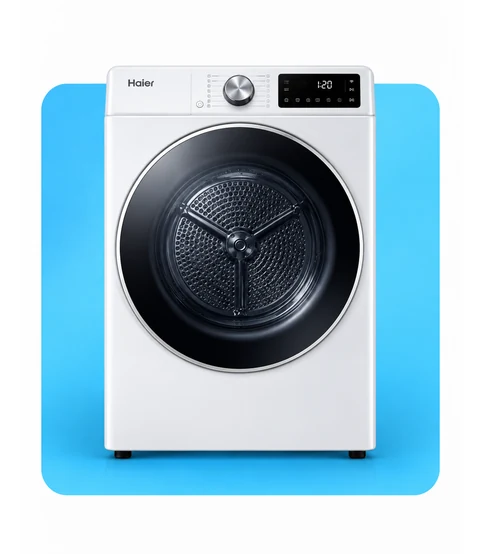
Haier Dryer Belt Replacement
A Haier drum that stops turning may need drive-system work. For HLP140E, HLP141E or another model, include the complete label so belt compatibility and service scope can be checked.
Online booking opens in a new tab.

Easily book and customize your appointment details online.

Select the day and time for your service, even as early as same-day.

Your tech arrives on time bringing the tools, expertise and know-how for the job.

Need help with a Haier dryer in Charlotte, NC? E-genius Appliance Repair reviews starting, heating and drum concerns by model. Tell us whether you have a standalone compact dryer or a combination washer/dryer before requesting service. Request an appointment online or call (980) 443-5851.
We're only a few clicks or a phone call away.
No risk. No pressure.
Guaranteed parts and service.
Expert technicians.
Start by identifying the appliance: a standalone Haier dryer and a combination washer/dryer do not share all faults. The symptoms below include clear feature notes so washing-stage or drainage issues are not mistaken for a standalone dryer defect.
Standalone HLP/HD dryers must not be diagnosed with combination washer/dryer codes. Combination-only symptoms are labeled separately, and service availability depends on the full model.
Dark panel or no response to Power
Controls respond, but the cycle never begins
The drum turns, but the load receives no heat
Laundry stays damp after a completed cycle
Unexpected stopping during a cycle
High-pitched sound during drum rotation
The dryer responds, but the drum stays still
Loads need unusually long or repeated cycles
Use this entry when the dryer does not respond at all, rather than when the controls work but the cycle will not start. Note any recent outage or electrical work. Supply and appliance faults require different checks.
The controls respond, but pressing Start does not begin tumbling. Check normal door closure and any control-lock setting in the model instructions. A persistent failure needs assessment of the start controls, door sensing and drive; never bypass a door switch.
A stationary drum with working controls is different from a complete loss of power. Tell us whether the motor hums or there is another unusual sound. The drive and controls need inspection before a belt or motor can be identified as faulty.
Related Haier repair optionsA hum without normal drum movement can involve the load, drive or motor. Stop repeated start attempts and describe the sound with your model number so the correct system can be assessed.
Related Haier repair optionsNote whether the entire dryer loses power or the cycle ends while the panel stays on. These are different situations. Door signals, heat protection, sensing and supply conditions need to be distinguished rather than treated as one failed part.
Compare the selected cycle with the condition and size of the load. An early sensor-cycle finish is not necessarily the same as a loss of power. Explain whether the controls stay on and whether the laundry is still damp.
Related Haier repair optionsFirst check whether a wrinkle-prevention function explains periodic tumbling after the main cycle. Continuous operation that does not match the selected settings needs a timer or control assessment.
Do not repeatedly reset a breaker that trips when the dryer operates. Supply, wiring and appliance faults require qualified assessment; increasing the breaker rating or bypassing protection is not a repair.
Check that a heated cycle was selected, then describe whether the dryer stays cold or loses heat after starting. The heating system, supply and controls need to be assessed together; a no-heat symptom does not prove that the heating element has failed.
Related Haier repair optionsA load that stays damp can involve load size, cycle selection, airflow or heat. Note whether the dryer warms up and whether the cycle finishes normally. This helps separate poor drying from a complete loss of heat.
Related Haier repair optionsCompare similar loads and record the cycle selected. Routine filter care, the drying route and heating performance all matter. Longer cycles alone are not a confirmed sensor or heater failure.
Related Haier repair optionsMixed fabrics and bulky loads can dry at different rates. Use the model instructions for load and cycle choices; if similar loads repeatedly dry unevenly, describe the pattern when requesting assessment.
Related Haier repair optionsStop using a dryer that seems excessively hot or repeatedly trips its thermal protection. Airflow, operating conditions and heating controls need assessment. Do not bypass a thermal fuse or thermostat.
Related Haier repair optionsCheck what cooling behavior is specified for the selected program. If excessive heat persists or the machine does not follow its normal cycle, stop use and describe the sequence for a temperature-control assessment.
Related Haier repair optionsThis entry applies to dryers with the relevant sensing display or function. Load contact and selected settings may affect sensing, so describe the load and whether timed drying behaves differently before assuming a sensor is faulty.
Applies to: Only models fitted with the relevant display, sensor or indicator.Related Haier repair optionsIdentify whether the dryer has a mechanical timer or an electronic time estimate. Some sensed cycles adjust their time during operation; persistent running with no progress needs a model-specific assessment.
A moisture-sensing program may revise the remaining time as it measures the load. If similar loads suddenly need much longer, describe changes in heat, airflow or load conditions instead of assuming the display itself is broken.
Related Haier repair optionsDescribe whether the noise is scraping, rumbling, rattling or rhythmic. Load objects, installation and rotating components can sound different. Stop use if the noise is severe or accompanied by smoke or abnormal heat.
Related Haier repair optionsCheck for loose items in the load and visible contact between the cabinet and nearby objects. If rattling continues with normal loading, the source needs assessment rather than a guessed roller replacement.
Related Haier repair optionsA crackling sound should be distinguished from fabric or fastener noise. If it is accompanied by sparks, burning odor or electrical symptoms, stop use and seek qualified help rather than running another test cycle.
Related Haier repair optionsA repeat squeak or squeal during rotation can involve a support, bearing or tensioning component. Tell us when it happens and whether the load changes it. The actual drive layout determines which parts need inspection.
Related Haier repair optionsStop use if grinding or scraping is persistent. An object, worn support or drum contact may need inspection; continuing to run the dryer can make it harder to assess and prevent further damage.
Related Haier repair optionsA bulky load and a mechanical drum-support problem can both cause thumping. Note whether the sound changes with normal loading and whether the dryer is stable. Persistent knocks need assessment.
Related Haier repair optionsSome switching sounds are normal, but clicking with failed starting or lost heat needs context. Record when the sound occurs and whether the drum and controls respond. Do not use the sound alone to select a relay or board.
Check visible stability and load balance without moving heavy equipment unsafely. Persistent vibration can involve installation or rotating components; tell us whether the machine has recently been moved or stacked.
Related Haier repair optionsFor a display-equipped dryer, describe whether the screen alone is dark or the entire machine is unresponsive. Note any sounds or other indicators. This distinction helps separate display, supply and control concerns.
Applies to: Only models fitted with the relevant display, sensor or indicator.Check the control-lock setting and normal start procedure in the model manual. If only some keys fail, record which ones. Do not press damaged controls repeatedly or assume a new board is required.
Record when the beeping occurs and whether a message or light appears with it. A cycle-end signal, lock setting and fault alert do not mean the same thing; the model instructions help identify the difference.
Record the exact letters, numbers and sequence before clearing a message. Use the separate code reference below and match its model notes. The display alone does not establish which part has failed.
Applies to: Only models fitted with the relevant display, sensor or indicator.See Haier codes and messagesCheck whether a delayed start or wrinkle-care option explains the behavior. If the dryer starts when it should not, stop using it and request a control assessment instead of relying on repeated resets.
Stop using the dryer. A door-safety problem requires qualified assessment; do not hold, bridge or bypass a switch to continue operation.
Related Haier repair optionsCheck for laundry caught in the opening without forcing the door. A misaligned latch, seal or hinge needs the correct model-specific assessment rather than repeated attempts to slam it shut.
Related Haier repair optionsDo not force the handle or lock. Follow the model instructions and allow any required cycle or safety delay. Explain whether the appliance is a standalone dryer or a combination unit.
Related Haier repair optionsThis applies only to models with an interior lamp. Check the expected light behavior in the manual and whether other functions work. The light unit, door sensing and controls may require different checks.
Applies to: Only US models with an interior lamp.Related Haier repair optionsSome filter indicators are routine reminders rather than a measured blockage. Follow the exact model instructions for cleaning, fitting and clearing the indication; do not assume the warning means a sensor has failed.
Applies to: Only models fitted with the relevant display, sensor or indicator.Related Haier repair optionsFor a vented dryer, a restricted route can affect heat and drying. Check routine filter care and visible installation conditions safely. Hidden ductwork or persistent restriction may need a qualified vent specialist.
Applies to: Vented models only.Related Haier repair optionsThis concerns vented installations, not a condensate tank. Duct routing, ambient conditions and airflow may contribute to condensation; the source needs assessment before an appliance water component is blamed.
Applies to: Vented models only; duct routing, ambient temperature and airflow.Related Haier repair optionsRead the exact warning and use the model-specific instructions. Clearing the display does not remove an actual restriction. Persistent warnings call for checking the appliance and the exhaust route.
Applies to: Only display-equipped vented models with that warning.Related Haier repair optionsFirst identify whether this is a standalone Haier dryer or a combination washer/dryer. A compact vented dryer does not use wash water; moisture from a duct or nearby machine needs to be distinguished from combination-unit drainage.
Related Haier repair optionsTell us whether the appliance has steam or combination-washing functions and when the moisture appears. Condensation and a water-system fault need different checks; do not assume a standalone dryer has a wash-water valve.
Related Haier repair optionsStop using the appliance and leave the area if there is active smoke or fire. Call 911 from a safe location. Do not open the cabinet, unplug equipment in a dangerous area or wait for an online appointment.
Read the urgent safety guidanceStop using the dryer until the source is assessed. A load, lint or an electrical problem may be involved; do not keep running it to see whether the smell clears. Active smoke or fire requires emergency help.
Read the urgent safety guidanceKeep clear and stop using the appliance. Do not touch damaged cords, plugs or wet electrical equipment. Have the supply and appliance checked by a qualified professional; seek emergency help for smoke or fire.
Read the urgent safety guidanceKeep people away and stop use. Do not touch the appliance again to confirm the symptom. Electrical supply and appliance safety must be assessed before further operation.
Read the urgent safety guidanceDamp loads, residues and drying conditions can contribute to a musty smell. Follow the model cleaning instructions and note whether clothes remain damp after a full cycle. Persistent odor may need inspection.
Related Haier repair optionsDescribe the odor and when it occurs. Residue and installation odors differ from burning or gas smells. Stop use for a burning smell; suspected gas leakage requires leaving the area and contacting emergency services or the gas utility.
Read the urgent safety guidanceCheck normal lint-filter care and load separation in the manual. A damaged filter, load conditions or restricted air circulation may need different attention. Note whether drying performance has changed as well.
Related Haier repair optionsStop drying delicate or affected items until the cause is understood. Note the type of damage and check for visible objects without dismantling the drum. Gaps, seals and load-related damage need different assessments.
Related Haier repair optionsRecord where the marks appear on the fabrics and whether there is scraping or a burning smell. Residue, seals and mechanical contact are different possibilities; avoid assuming a particular drum part is at fault.
Related Haier repair optionsStop using the dryer. Scorching requires an assessment of the load conditions, heat control and airflow. Do not continue with a lower setting as a substitute for checking abnormal heat.
Read the urgent safety guidanceCompare garment-care labels with the selected cycle and temperature. Fabric sensitivity and overdrying differ from a temperature fault; request assessment if the dryer is hotter than expected or controls do not respond.
Related Haier repair optionsLoad size, fabric mix and time left in the drum can affect wrinkling. Check the recommended settings and wrinkle-care options before treating wrinkles alone as an appliance failure.
Related Haier repair optionsVery dry loads and mixed fabrics can increase static. Review dryness settings and fabric-care instructions. If the dryer consistently overdrys despite appropriate settings, explain the pattern when requesting service.
Related Haier repair optionsThis is a combination washer/dryer scenario. Note whether water has drained, which drying program was selected and any message shown. Its drying and washing systems must be checked against the combination model.
Applies to: Combination washer-dryer only.Related Haier repair optionsThis concerns a combination appliance and may originate in the washing stage. Follow only the safe user-maintenance steps in its manual. Do not transfer the code or diagnosis to a standalone dryer.
Applies to: Combination washer-dryer only; can concern the washing stage.Related Haier repair optionsDescriptions cover possible service scenarios, not confirmed component failures. Follow the owner instructions for your exact model and leave internal electrical, gas and refrigeration work to qualified professionals.
Haier dryer service starts with the appliance type and full model. Compact standalone dryer repairs and combination-unit drainage or wash-stage work are not interchangeable.
A Haier drum that stops turning may need drive-system work. For HLP140E, HLP141E or another model, include the complete label so belt compatibility and service scope can be checked.
Poor drying is not automatically a failed heater. We assess the selected cycle, airflow and relevant electric heating system before recommending a Haier dryer part.
Noise, a stalled drum or unreliable rotation need a model-specific mechanical assessment. We distinguish a drive problem from an electrical starting fault.
If the dryer responds but will not start, door closure and control inputs may need checking. A standalone latch and a combination-unit door lock are different systems.
For a vented Haier dryer, drying performance depends on the filter and exhaust route. We separate appliance faults from duct or installation conditions.
Combination-unit drainage, wash-stage or drying faults require the correct Haier model and code table. Contact us to confirm that scope instead of applying a combo code to a standalone dryer.
For Haier service, send the model label and tell us whether the machine also washes clothes. We can then review the issue and confirm the applicable service options. Repairs depend on diagnosis, model compatibility and parts availability.
Request Haier Dryer ServiceThe reference below covers US Haier combination washer/dryer messages, not standalone HLP/HD dryers. Check your appliance type first and expand the combination reference only when it matches your machine.
Applies to: US Haier combination washer/dryer only; exact model required. Faults, warnings, diagnostic entries and normal status messages are labeled separately. No service-mode entry or internal repair instructions are provided.
Only for a matching US Haier combination washer/dryer. Some messages concern the washing stage rather than the drying system.
What to do: Check normal door closure and visible obstructions without forcing the latch. If the condition persists, request assessment of the door circuit; never bypass a safety switch.
Applies to: Combination washer/dryer ONLY; not standalone HLP/HD dryers
Manufacturer referenceWhat to do: Use the model instructions for routine container, water-supply or accessible hose checks as applicable. Avoid wet electrical equipment. Request assessment if the condition returns or the source is not safely accessible.
Applies to: Combination washer/dryer ONLY; not standalone HLP/HD dryers
Manufacturer referenceWhat to do: Use the model instructions for routine container, water-supply or accessible hose checks as applicable. Avoid wet electrical equipment. Request assessment if the condition returns or the source is not safely accessible.
Applies to: Combination washer/dryer ONLY; not standalone HLP/HD dryers
Manufacturer referenceWhat to do: Record the exact display and full model number. A reliable component-level meaning has not been established here; ask for a model-specific assessment rather than selecting a replacement part.
Applies to: Combination washer/dryer ONLY; not standalone HLP/HD dryers
Manufacturer referenceWhat to do: Record the exact display and full model number. A reliable component-level meaning has not been established here; ask for a model-specific assessment rather than selecting a replacement part.
Applies to: Combination washer/dryer ONLY; not standalone HLP/HD dryers
Manufacturer referenceWhat to do: Record the exact display and full model number. A reliable component-level meaning has not been established here; ask for a model-specific assessment rather than selecting a replacement part.
Applies to: Combination washer/dryer ONLY; not standalone HLP/HD dryers
Manufacturer referenceWhat to do: Record the exact display and full model number. A reliable component-level meaning has not been established here; ask for a model-specific assessment rather than selecting a replacement part.
Applies to: Combination washer/dryer ONLY; not standalone HLP/HD dryers
Manufacturer referenceWhat to do: Follow the approved filter-care steps for the model and check safely visible airflow or installation conditions. A returning warning needs assessment of the actual restriction; clearing the message is not a repair.
Applies to: Combination washer/dryer ONLY; not standalone HLP/HD dryers
Manufacturer referenceWhat to do: Use the model instructions for routine container, water-supply or accessible hose checks as applicable. Avoid wet electrical equipment. Request assessment if the condition returns or the source is not safely accessible.
Applies to: Combination washer/dryer ONLY; not standalone HLP/HD dryers
Manufacturer referenceWhat to do: Check normal door closure and visible obstructions without forcing the latch. If the condition persists, request assessment of the door circuit; never bypass a safety switch.
Applies to: Combination washer/dryer ONLY; not standalone HLP/HD dryers
Manufacturer referenceWhat to do: Use the model instructions for routine container, water-supply or accessible hose checks as applicable. Avoid wet electrical equipment. Request assessment if the condition returns or the source is not safely accessible.
Applies to: Combination washer/dryer ONLY; not standalone HLP/HD dryers
Manufacturer referenceWhat to do: Use the model instructions for routine container, water-supply or accessible hose checks as applicable. Avoid wet electrical equipment. Request assessment if the condition returns or the source is not safely accessible.
Applies to: Combination washer/dryer ONLY; not standalone HLP/HD dryers
Manufacturer referenceWhat to do: Stop repeated start attempts if the drum does not turn normally. Describe any humming or mechanical noise and arrange a model-specific assessment of the drive and its controls.
Applies to: Combination washer/dryer ONLY; not standalone HLP/HD dryers
Manufacturer referenceWhat to do: Record when the condition occurs and stop use for abnormal heat, scorching or burning smells. Temperature and heating circuits need model-specific diagnosis before a sensor, heater or control is replaced.
Applies to: Combination washer/dryer ONLY; not standalone HLP/HD dryers
Manufacturer referenceWhat to do: Use the model instructions for routine container, water-supply or accessible hose checks as applicable. Avoid wet electrical equipment. Request assessment if the condition returns or the source is not safely accessible.
Applies to: Combination washer/dryer ONLY; not standalone HLP/HD dryers
Manufacturer referenceWhat to do: Stop repeated start attempts if the drum does not turn normally. Describe any humming or mechanical noise and arrange a model-specific assessment of the drive and its controls.
Applies to: Combination washer/dryer ONLY; not standalone HLP/HD dryers
Manufacturer referenceWhat to do: Record when the condition occurs and stop use for abnormal heat, scorching or burning smells. Temperature and heating circuits need model-specific diagnosis before a sensor, heater or control is replaced.
Applies to: Combination washer/dryer ONLY; not standalone HLP/HD dryers
Manufacturer referenceWhat to do: Stop repeated start attempts if the drum does not turn normally. Describe any humming or mechanical noise and arrange a model-specific assessment of the drive and its controls.
Applies to: Combination washer/dryer ONLY; not standalone HLP/HD dryers
Manufacturer referenceWhat to do: Note the load size, selected cycle and drying result. Operating conditions and sensing faults need different checks; a message alone is not proof that a sensor needs replacing.
Applies to: Combination washer/dryer ONLY; not standalone HLP/HD dryers
Manufacturer referenceNo matching code for these filters. Select All or check the control family, then verify the exact display and model. A missing code does not mean the dryer has no fault.
Reference material: Manufacturer support / technical reference. Match the full model before using a code definition. Symptom descriptions are diagnostic starting points, not brand defect statistics.
Request Haier dryer service when the unit will not start, cannot complete drying or has a persistent drum problem. If the appliance also washes, describe which stage fails and confirm the model before applying any code meaning.

Tina Sean
I had my oven repaired by E-genius Appliance Repair within the same day I called, which I greatly appreciated. I found them to be extremely helpful and affordable compared to other local appliance repair businesses I contacted.

Loyd Swonson
I will recommend E-genius Appliance Repair in Charlotte! Technicians are dedicated to assisting you with good stewardship of your resources by providing the most cost effective and efficient resolutions to your appliance needs! this information is confirmed by me! Thank you so much)

Charles Rapoport
Appliance Repair Charlotte is by far the most convenient home appliance repair company in Charlotte. Over the years they’ve repaired my refrigerator, washing machine, clothes dryer, dishwasher and oven. I just tried their new online scheduling system, and I Love It! - So convenient!

Jennifer Johnson
Great guys. Great service. Alexander and his team really know whats going on. They repaired my LG washer and dryer the same day I called them to come out. They refunded my inspection fee and were cheaper than the other guys I called first. I couldn't be happier.

Your Haier dryer is not the only Haier appliance our team can help with. Explore the additional Haier service categories below, and contact us if you need assistance with another Haier product.

ask for help

ask for help

ask for help

ask for help
Leave a request and our manager will give answers to all questions
call me backYour message has been successfully sent. We will contact you very soon!